Dependency risk verification
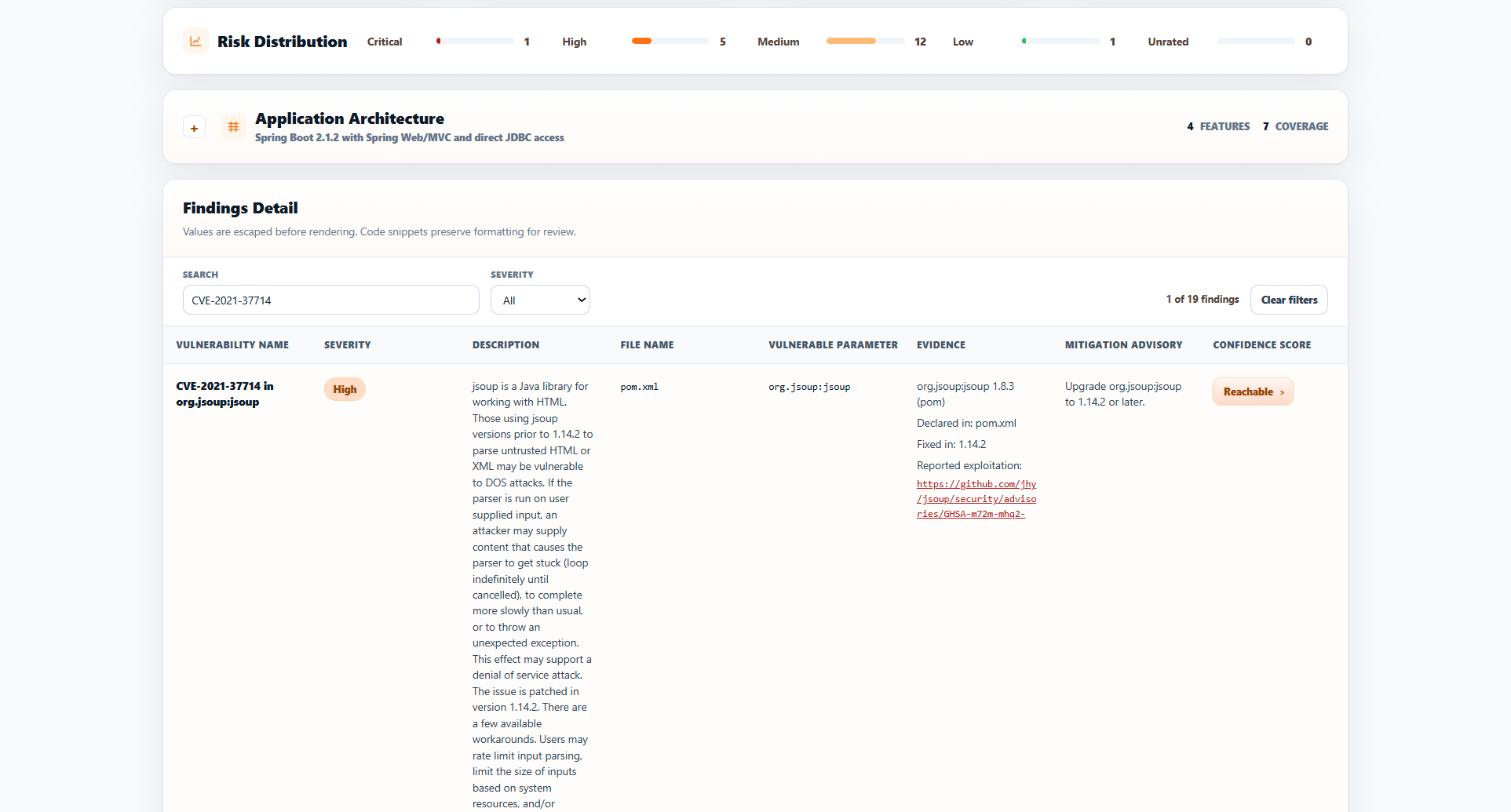
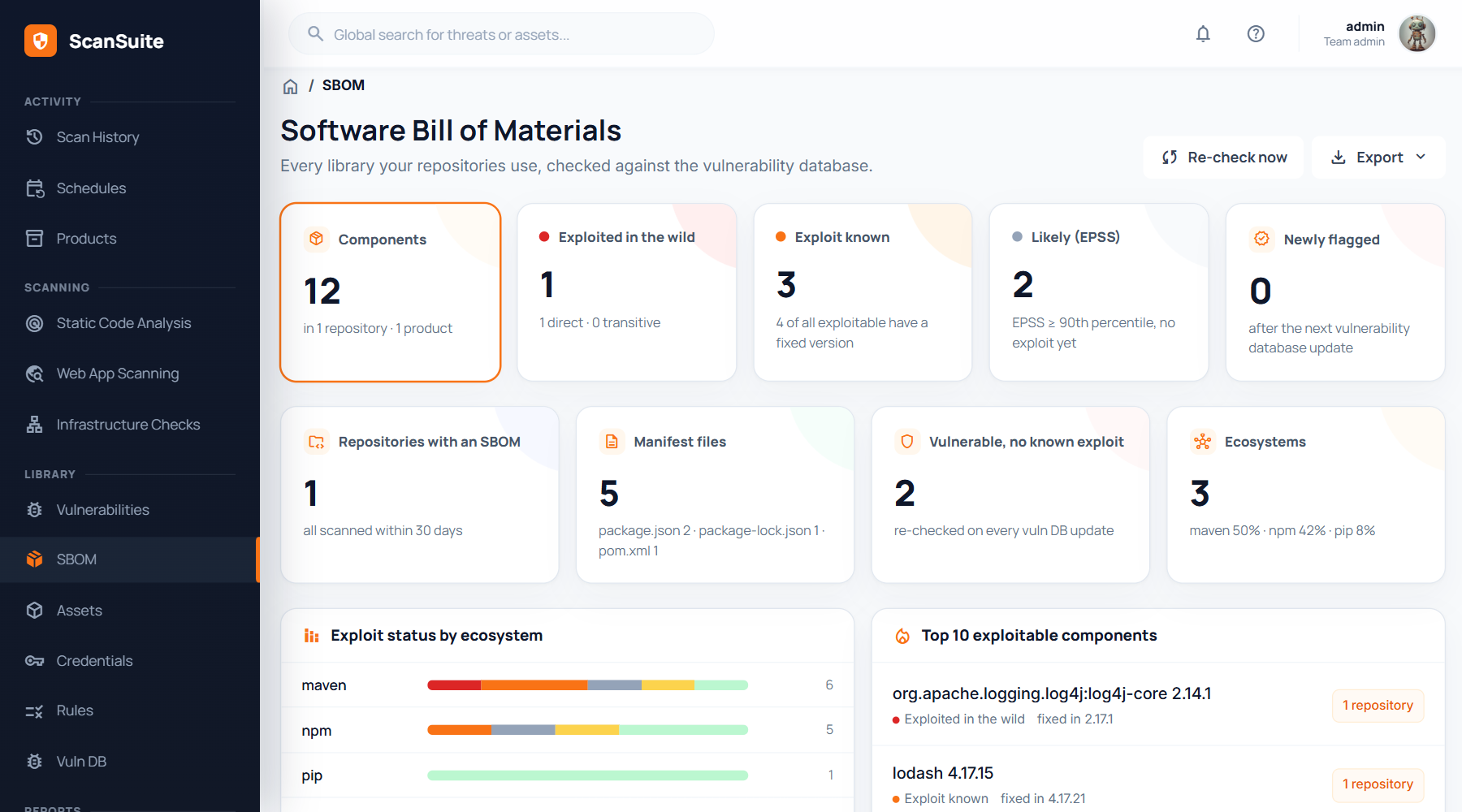
Only advisories that are exploitable and reached by your code.
- Known exploit: KEV, public exploit or PoC
- Installed version checked against the range
- Call path traced into your code
ScanSuite finds them in your code, dependencies and secrets, proves which ones are real, and follows each one from first detection to a verified fix, with the same answer on every scan. Self-hosted, with your own models.
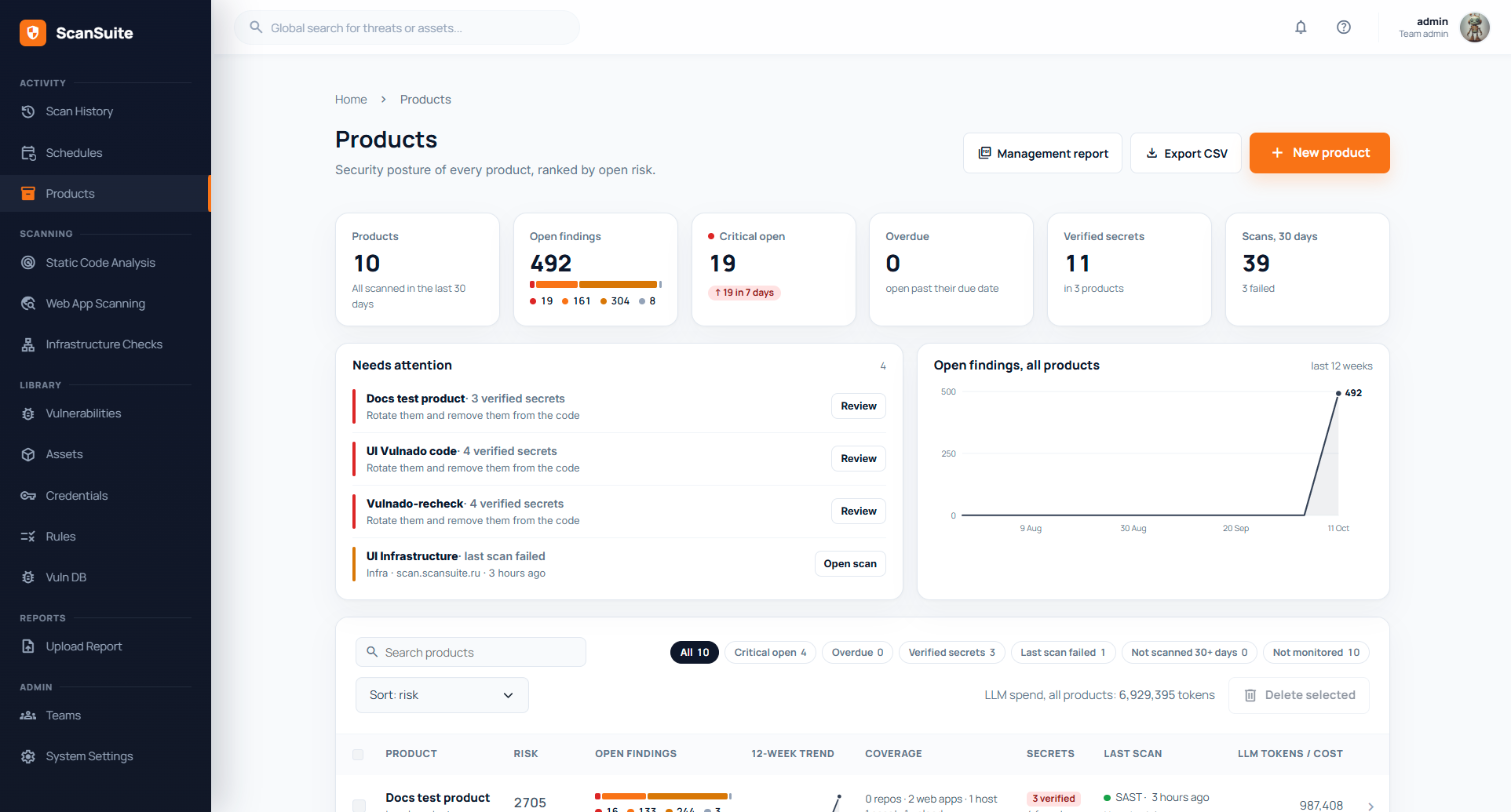
Code, dependencies and secrets in one scan; every finding lands in one record you can triage, prove and close on evidence.
Finds broken authorization and business-logic flaws no rule describes, and shows how each one is reached before it is reported.
AI SASTOnly advisories that are exploitable and reached by your code.
Every component of every repository, kept current.
Several scanners, one verdict.
An agent reads the current code before anything closes.
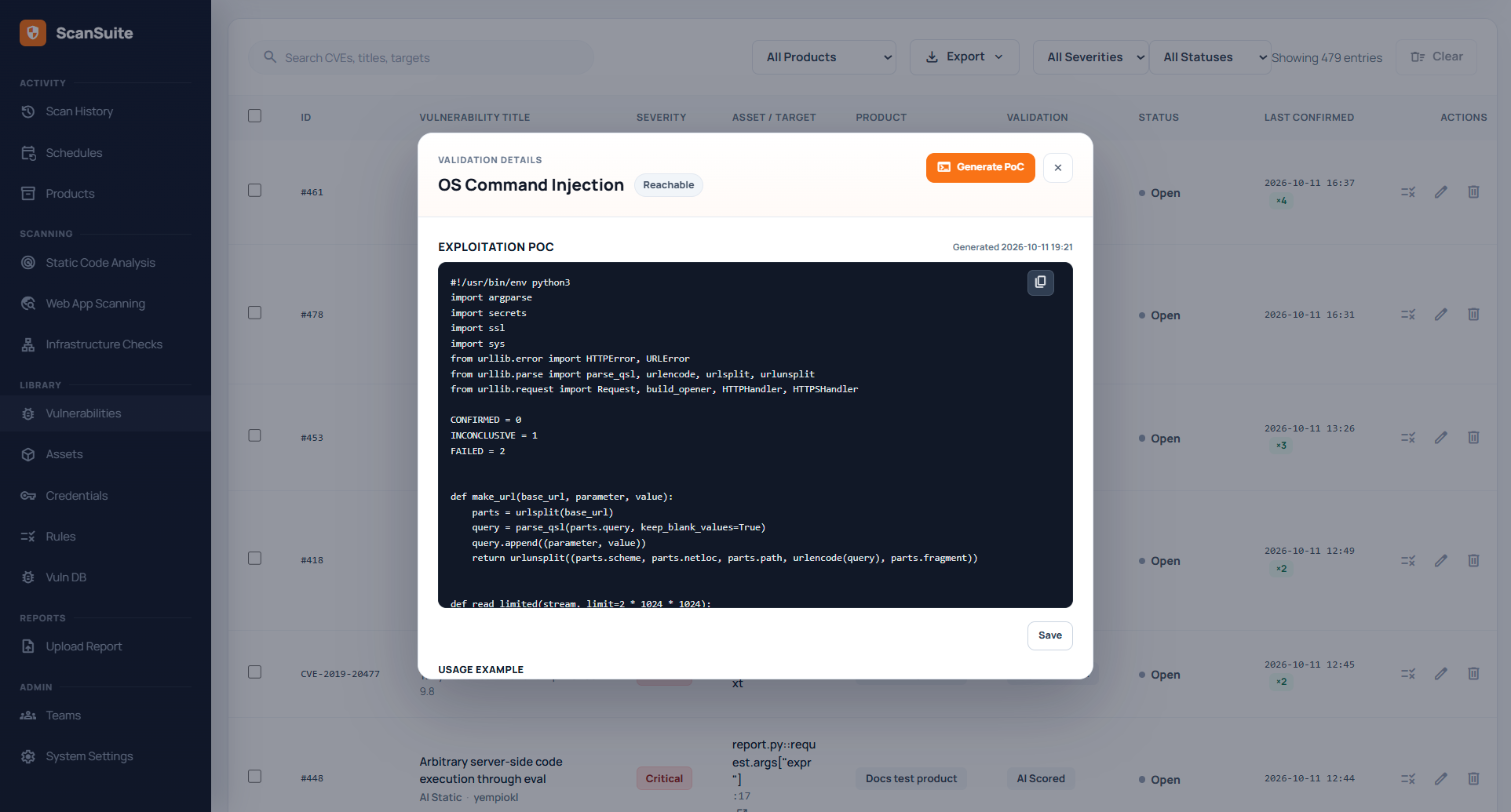
Generated from the finding, run in a sandbox.
One command in any pipeline.
Four gates, each with its evidence on the finding. What passes all four is worth a developer's afternoon.
Severity floor from the advisory.
KEV, public exploit or PoC in the local database.
Installed version checked against the affected range.
Call path traced from your code to the vulnerable function, with a diagram.
Plan a pentest in minutes, run it inside your own perimeter, and get findings your team can act on the same day.
Run a pentest on a schedule or from the CI pipeline, as often as you ship, and run it again from the scan page once a fix is in.
Many applications and networks are tested side by side, each by its own team of agents, with coverage tracked for every host and check.
Every finding arrives with the requests that prove it, and the serious ones are checked a second time before they reach your team.
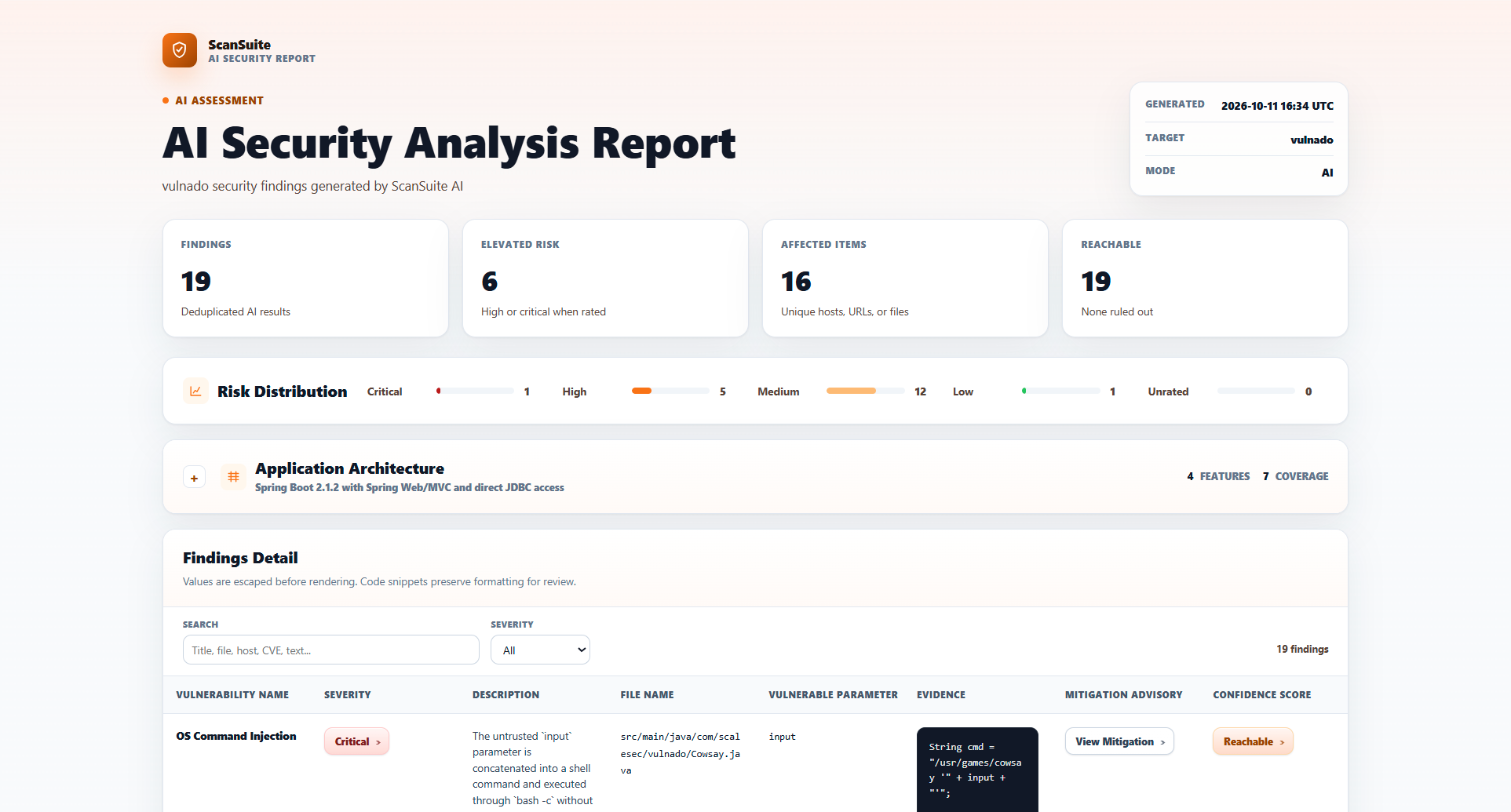
Each report shows what was tested, what was found and what remains open. Findings land in vulnerability management, ready to assign and track.
Production presets, run windows, rate limits and read-only mode are set once for the organisation and applied to every run.
It runs in your own infrastructure with the AI models you choose, and shows the cost of each run as it goes.
Findings from every engine and every scanner follow the same path, with a full history on each one. Hand them on to DefectDojo, ServiceNow, XLSX, HTML, PDF or PowerPoint.
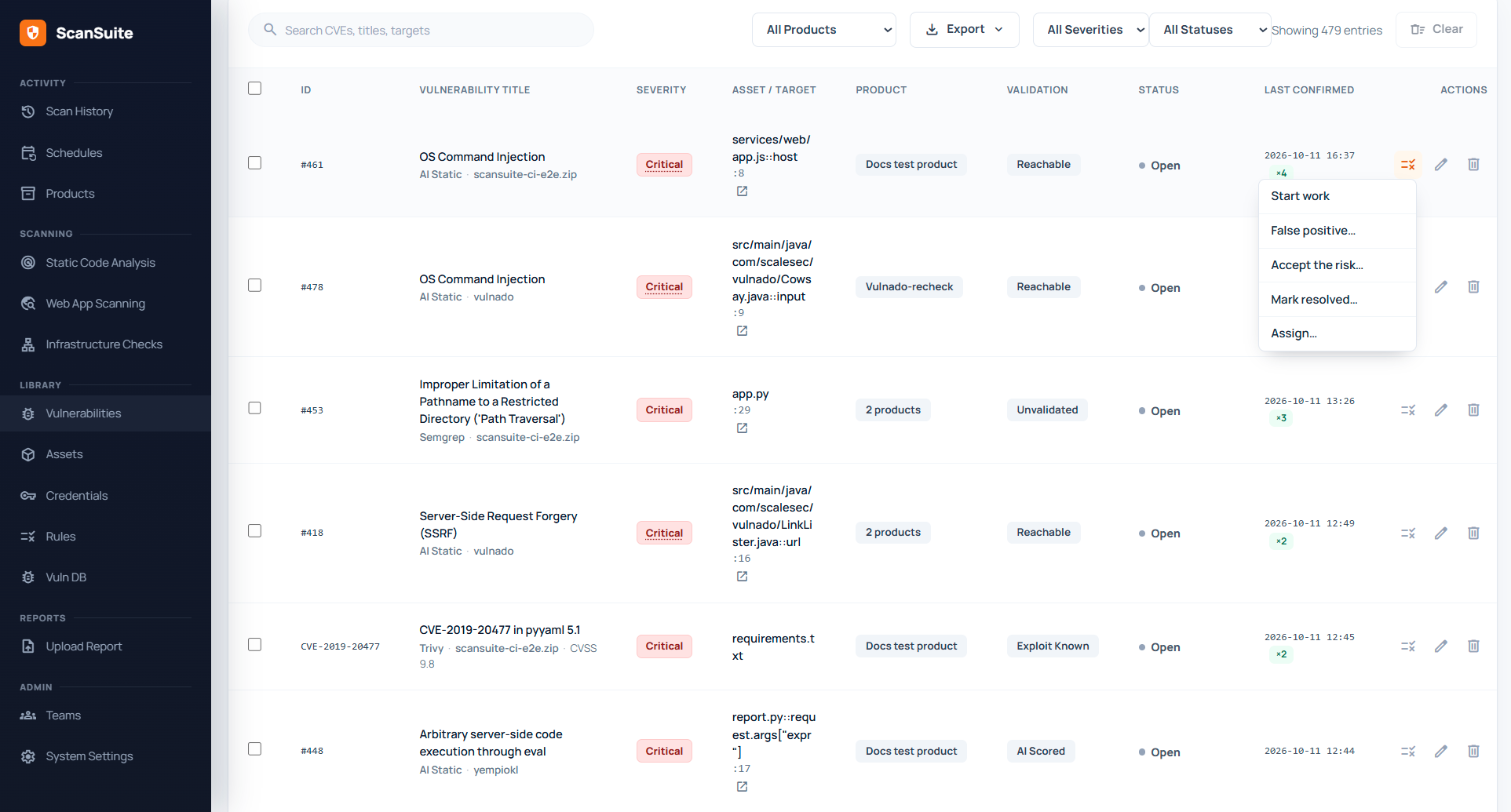
One record per issue, however many scans report it.
Every decision needs a reason. False positives can become suppression rules.
An owner and a due date by severity: 7, 30, 90 or 180 days by default.
A deep link to the line, the suggested fix and the evidence.
Closed when the fix is confirmed, reopened if the issue comes back.
Screens from the product, unedited. Click one to see it full size.
Proven open-source and commercial scanners, run on schedule against the targets your team allows, with results in the same vulnerability record.
A working session on real findings, not a slide deck.